
Some Post-Chelsea Thoughts

Ahead of Spurs’ first London derby of the season there was some unexpected team news for both sides which made for a fascinating situation where nobody quite new how either team would line up.

Spurs presented their team as: Lloris (C), Trippier, Alderweireld, Vertonghen, Davies, Dier, Wanyama, Dembele, Eriksen, Dele, Kane. This implied a back four, with Dier, Wanyama and Dembele in midfield, which seemed highly unusual but proved to be correct.

Chelsea presented their team in number order, but included four players who would usually play as part of their back three, leading to suggestions that David Luiz would, in fact, line up in midfield alongside Tiémoué Bakayoko and N’Golo Kanté. He did so, and their system was something like a 3-5-1-1.

This led to a number of questions: where was Chelsea’s midfield creativity going to come from? How would their ‘new’ back three gel? How would Spurs’ creative players find space? How would Kieran Trippier — just back after injury — cope with getting up and down the large Wembley pitch?

Chelsea started in a stodgy but effective manner, and created a huge chance after five minutes, Cesar Azpilicueta finding Alvaro Morata in space between Trippier and Toby Alderweireld. Indeed, Chelsea dominated the opening 25 minutes, taking the lead through a Marcos Alonso free-kick, but there was a surprising vulnerability about their midfield. David Luiz initially looked uncomfortable in his defensive midfield role, often being tempted towards the ball and leaving Dele Alli and Christian Eriksen to pick up possession behind him. This led to Spurs being able to create openings, and Harry Kane hit the post when Luiz was caught ahead of the ball again and Alli gave Azpilicueta the slip, finding Kane who cut in and was just off target with a firm, low strike.

Spurs finished the half strongly with Ben Davies getting on the end of a Kane pass and testing Thibaut Courtois, before a flurry of set pieces created a few ‘nearly’ moments. But despite the strong ending, there were clearly issues in Spurs’ approach play, with their unnatural three-man midfield not suiting at least two out of the three. Mousa Dembele and Eric Dier were being asked to take possession in what were essentially full-back positions in the build-up play, and this looked particularly uncomfortable for Dier.

In addition, Trippier is a player who needs to be found high up the pitch to allow him to use his lethal crossing ability, rather than being able to get into those areas by himself — he is not a ball carrier and struggles to beat a man through pace or individual skill, so he was pretty unsuited to the task he was being asked to undertake.

The second half saw Spurs continue with the same unbalanced formation and, whilst they managed the possession effectively, they could not convert it into clear cut chances. Only Eriksen and Kane looked likely to create, and it seemed as though that could only come from a moment of magic rather than a systematic advantage. Meanwhile, Chelsea were happy to sit deeper and deeper and defend their penalty box and let Spurs move the ball from side to side.

On 67 minutes, Pochettino made a tactical change, removing Eric Dier, who was on a yellow card for a poor challenge, and introduced Son Heung-min. Son took up a position on the left of a 4-2-3-1. However, by this point, Victor Wanyama was starting to struggle in midfield. He had only just returned to fitness, and had not looked fully sharp all match, but it was becoming increasingly apparent that he was tiring, and the substitution perhaps saw the wrong player removed.

Chelsea took the opportunity to try to seize the advantage again, and started pouring bodies forward, Willian repeatedly getting the wrong side of the tiring Wanyama and starting to cause problems in the number ten zone.

Spurs sent on Mousa Sissoko for Ben Davies, switching to a back three (in fact, a 3-4-2-1 of Lloris; Wanyama, Alderweireld, Vertonghen; Trippier, Sissoko, Dembele, Son; Eriksen, Dele; Kane) and managed to get back into the game when Batshuayi glanced a wonderfully-whipped Eriksen free-kick into his own net. But this second formation change seemed to spark chaos, and the game became stretched and frantic.

Chelsea eventually profited from this after Dembele — temporarily covering for Wanyama at centre-back — snuffed out danger and allowed the ball to run back to Lloris; Lloris saw a counter-attacking opportunity and bowled the ball out to Wanyama, who had Sissoko to his right. Wanyama needed to sweep the ball right first time, but instead tried to take a touch, allowing Luiz to nip in and seize possession. He found Alonso, who played a give and go with Pedro; Alonso ran past Wanyama into the box, and a now-limping Dembele couldn’t get across to cover. Alonso shot low past Lloris, who threw himself down on the ball but let it go under his body. Overall, the goal was a mess with players out of position, tired, limping, and making poor decisions. Lloris should not have thrown the ball out to a limping Wanyama, and Wanyama should have known not to take a touch in a hectic midfield area.

Antonio Conte’s three-man midfield, despite lacking creativity, did a remarkable job of nullifying Spurs, and primarily restricting chances to long-range efforts and hopeful crosses. David Luiz let Eriksen and Alli get goal-side of him too many times in the first half, but in the second half — when he was playing deeper — he did a remarkable job of being in the right place at the right time (ending with 5 tackles, 4 clearances), and was the half’s outstanding player. Tiémoué Bakayoko had a wonderfully energetic debut and showed signs of what he could be this season for Chelsea.

Conversely, Tottenham’s midfield three was a worst-of-both-world’s situation. Mousa Dembele’s unique skillset was wasted with him transitioning the ball from a fullback position into Eriksen and co, whilst Eric Dier is too immobile to play the equivalent shuttling job on the right of a three. Spurs had Winks sat on the bench who is much more suited to the role if Pochettino felt it was the best method. Equally, Kieran Trippier is not equipped to carry the ball up the right flank and, as such, Spurs barely forced their opposite numbers to commit themselves on the flanks and mostly played in front of them.

Next week Tottenham play Burnley who, like Chelsea in this match, will play a low block. We will likely need to change formation and/or personnel if we are to grind out a win against another defensively-disciplined team. On the plus side, Harry Kane looked self-assured and lively (8 shots, 3 on target) against Chelsea, and Burnley should fear his desire to put his no-goals-in-August record behind him.
Danny Rose: a stark reminder

When Kyle Walker was branded a snake after quietly manoeuvering his exit to City behind the scenes, landing the club a staggering fee for a 27-year old and sending a heartwarming video to the fans after his many years of service, I thought the treatment was incredibly harsh. Danny Rose’s moves yesterday feel thoroughly reptilian.

Rose who, lest we forget, has been injured for months, set up an interview with The Sun newspaper — the grubby tabloid needs no introduction — to explain that he will get what he deserves financially, that he will play for a northern club before he finishes playing, and to let the world know that he will never forget how badly Spurs fans treated him. There are various other points that he makes which I will come back to, but first I want to focus on the point of this interview.

In my opinion there can be little doubt as to the intentions of this: it’s both a ‘come and get me’ plea to the Manchester clubs, and a pre-emptive, PR-driven ‘I had no choice but to leave’, face-saving, mop-up job. Rose wants fans, media and potential sponsors to feel as though he was backed into a corner by Spurs’ lack of transfer activity, lack of silverware and by them not paying him market rate.

I have seen suggestions that Rose is taking one for the team, giving Daniel Levy a kick up the backside. There is absolutely no way that a player would approach a mainstream tabloid in this way for that purpose, it is far too risky a move.

Some have some sympathy with Rose. He’s 27, he’s paid considerably less than players at the wealthiest clubs, and he has never won a trophy. But he’s also playing for the team that finished as runners-up last year, with the potential to improve with some consolidation. There are no guarantees that a move would bring trophies and, indeed, he owes his career to Mauricio Pochettino, who has transformed him from a decent Premier League player to one of the best in his position in world football. He is paid a decent salary compared to most other Premier League footballers (ignoring the wealthy five for a moment), has been given steady incremental rises over the years, even when– quite frankly — he did not deserve them.

To arrange this interview days before the season starts in order to benefit himself (either, depending on your interpretation, to ruffle feathers, negotiate a better contract or to try to force through a transfer) will — at worst — leave us without a top class left-back for the season or — at best — have a destabilising impact. This self-centred approach to the game is a stark reminder of what football (a game played by a team) has become, and also of where Spurs really sit in the pecking order.

The points Rose makes about Spurs’ lack of spending would be fair enough coming from an embittered fan. We have yet to strengthen, and it has been frustrating to watch our rivals improve their squads (and in some cases, their first elevens). But ultimately he is an employee of the club, and the management will be absolutely furious that he has gone rogue in this way. Levy has generally overseen a tenure where players toe the company line, and anyone who hasn’t has generally not lasted long.

Pochettino must feel incredibly let-down too. Rose and Pochettino are known to be particularly close, with Rose nicknamed the manager’s son by his teammates.

The suggestion by some fans that Rose has a point, and that Spurs should just pay the going rate totally missed the point.

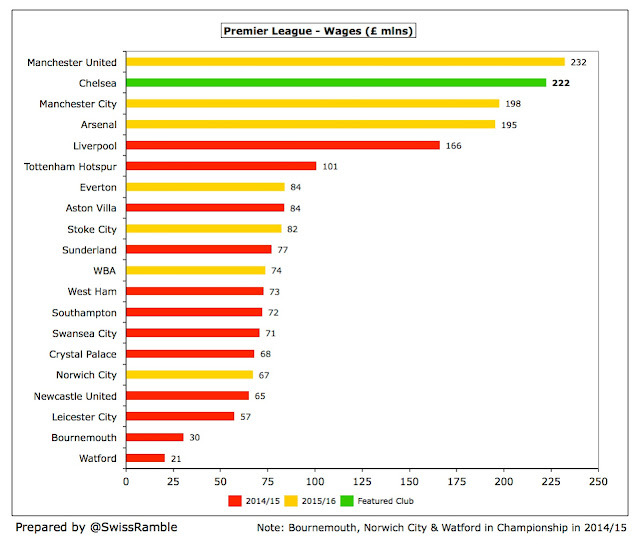
Daniel Levy is hamstrung by our lack of revenue — hence the need for a new stadium. Swiss Ramble writes wonderfully about football finances and wrote in January of this year that we had a ‘wages to turnover ratio’ of 51%, with Manchester United 45% and Manchester City 50%. This means that the percentage of our turnover that goes toward wages is higher than that of the Manchester clubs; their huge turnovers make their higher wage bills possible/sustainable. For comparison, Arsenal’s ratio is 56%, Liverpool’s 56%, and Chelsea are an anomaly on 68%. When you see Premier League wages presented in this way it illustrates the market that we are working within.

If ‘market rate’ for Rose’s wages are £160k per week, reportedly around £95k per week more than what he earns currently, that would involve spending an additional £5m a year on him alone. Were we to make similar increases to all of our best players (which we would have to do were we to bump up his salary), we’d be looking at over £50m. We cannot afford this; not least because we have £750m worth of stadium to pay for.

A point to end on before I have to try to forget Danny Rose and think about my day job: Rose is risking an awful lot in a World Cup year. If he doesn’t get the move that he seems to crave, he could face having to build bridges with his manager and we know from experience that Pochettino has a low tolerance to this kind of behaviour. Players have said far less and ended up gone.

Being Left Behind

One of the comments being directed at signing-less Spurs this transfer window is that we are ‘being left behind’.

In this unusual transfer window, where prices have rocketed similarly to how they suddenly leapt up around 2006/2007, Spurs are the last Premier League club to make a signing. There are two key points to make on this, surrounding:

1. The pool of players.
2. Value for money.

The Pool of Players

The pool of suitable players available to Spurs is smaller than that available to other clubs due to a number of factors. The first factor is that we have one of the best teams (if not the best team) in the Premier League, and so improving on that is naturally more difficult for us than, say, for Everton, who last season had a demonstrably worse team.

Secondly, due to our wage structure — which has been necessary for a number of reasons, including limited match-day revenue — we are unable to offer the wages that some of our rivals offer. We can counter this to some extent with large ‘signing-on’ fees, and also apparently offer an attractive bonus structure, rewarding players for successes. We also regularly refresh contracts, meaning that players have a constant sense of financial progression; a smart move. But there is little doubt that our wage packages are less attractive than those at other clubs.

So with a smaller pool of players that would improve us available, and being unable to attract many of those players due to our wage structure falling below that of their current clubs/rival clubs, we are left trying to find value elsewhere.

Value For Money

Daniel Levy has described transfer prices as ‘unsustainable’ and, in some cases, he is right. There are clubs who simply cannot continue spending these sums as their revenue won’t sustain the level of spending. But Daniel Storey makes the point well in his article for Football 365 that Manchester City, for example, ‘have unprecedented resources; why wouldn’t the transfer fees be unprecedented too?’. For some clubs this will simply be the new norm.

Levy will undoubtedly have been frustrated by the £30m which was (in)effectively thrown away on Moussa Sissoko, and asking him to part with the same or a bigger fee will now be a more difficult task; he will need assurances that we are getting better value for the prices stated. One would have to imagine that Sissoko in this window would likely cost another £5m minimum.

My gut feel is that we ought to resort to the transfer strategy of a few years ago, focusing primarily on strategically identifying young prospects who have not quite ‘broken out’, signing them early and loaning them back to their clubs to foster their potential. Ryan Sessegnon would have been (and would still be) an ideal signing at this level, but there are other budding young talents in the football league too: Ronaldo Vieira at Leeds, Ben Brereton and Joe Worrall at Nottingham Forest, Ezri Konsa at Charlton to name a few.

In my opinion we do need to sign a right-back to replace Kyle Walker (because I don’t think Kieran Trippier is stylistically the right fit), and we could also do with a Christian Eriksen rotation, but otherwise we are pretty well set and don’t need to worry too much about keeping up with the Joneses.

There are no issues with our 25-man squad list either. Despite the fact that we have lost a number of ‘homegrown’ players in the last twelve months — Walker, of course, but also Tom Carroll, Ryan Mason, Nabil Bentaleb — we only actually have 18 players to list, four of whom qualify as homegrown (Harry Kane, Danny Rose, Ben Davies and Kieran Trippier). We could feasibly sign another three non-homegrown players and still be able to name them all in the squad list.

Far from being left behind, last season we were the team leaving others behind, and there is no reason why our squad cannot continue its upward trajectory, boosted by another year of experience, a few more Academy players looking ready to step up, and the return from injury of Erik Lamela and (hopefully) Danny Rose.

Academy Players Feature In Tour Squad

A number of Academy players have travelled to the United States with the first team on the pre-season tour, and I thought I would write a brief round-up on each.

The selection includes second year Academy scholars Jon Dinzeyi and Tashan Oakley-Boothe, recent Academy graduates Brandon Austin, Alfie Whiteman and Jaden Brown, plus established Development Squad members Will Miller and Anthony Georgiou.

Mauricio Pochettino told the official site: “They’ve all impressed me in the first few weeks (of pre-season) and with John McDermott (Head of Player Development) we decided to give them the possibility to join us on the tour. It’s a big opportunity for them, a great opportunity to show their quality and why not, maybe we are seeing a player for the future of the first team?”

Below is a little about each of the involved players.

Brandon Austin
Age: 18 Position: Goalkeeper
Austin may have come onto your radar when he was lucky enough to train with the England squad at Hotspur Way last season. If not, then his performance against Chelsea in the Youth Cup Semi-Final at White Hart Lane may have caught your eye; he made a number of terrific saves and really helped to keep the score down. Austin has dual English/American nationality so he may even have joined a different queue at passport control!

Jaden Brown
Age: 18 Position: Left-back
Brown lost his place in the Under-18s to Nick Tsaroulla last year, which led to him being promoted to play Under-23s, perhaps ahead of time. He actually made the jump pretty well, and ended up performing better at that level, even scoring a couple of times. He has represented England at Under-16, Under-17 and Under-18 levels, despite his club form being somewhat patchy, and is known as an athletic full-back who gets up and down well. My gut feel is that he’s here due to the injury to Rose more than anything, but it would be great to see him take his chance.

Jon Dinzeyi
Age: 17 Position: Centre-back
Dinzeyi is a versatile player, having come through as a winger before settling on centre-back. He’s tall — he must stand at around 6’4 — and quick across the ground. Last season he was a little error-prone, and his centre-back partner, Japhet Tanganga, was the one who often stood out, but Dinzeyi has the raw materials to be an interesting player, and I’m fascinated to see how he looks at this level.

Anthony Georgiou
Age: 20 Position: Winger
Georgiou, a Cypriot youth player, had a rough time with injuries last year, missing the majority of the season for the Under-23s. He came through the Under-18s as a traditional, touchline-hugging left winger but has ended up playing at left-back for the Under-23s on occasion, also switching to the right to play as an inverted winger. I was surprised to see his name on the squad list — particularly with Marcus Edwards and Sam Shashoua not included — but wonder whether this is, perhaps, a ‘shop window’ job, as Georgiou could do with a loan move to test his mettle.

Will Miller
Age: 21 Position: Attacking midfield
Miller will be a familiar face, after appearing for the first team both in pre-season of last year and also the post-season tour. He had a loan spell at Burton last year, which I summarised here, and impressed Nigel Clough with his attitude:

“It’s incredible, his attitude. Every training session, he is sharp, he is bright. We’ve managed to get him on the bench a few times, not get him on the pitch too often.

“It’s just a lovely, refreshing attitude these days. Tottenham actually wanted him back, they said they wanted him to go out to League One and play, they said that’d benefit him more. But he said, ‘I’m happy here, I like being around the first team and I want to try to help them stay up’.”

He’s primarily a number 10, but can cover right and left wing, and has played deeper too.

Tashan Oakley-Boothe
Age: 17 Position: Central midfield
Oakley-Boothe is an interesting player — he made a name for himself with some sparkling Under-16 performances, but then didn’t quite replicate his form at Under-18 level. It’s clear that there’s a lot of potential there and, as a result, he’s been involved with England at Under-16 and Under-17 age groups, and has trained with our first team often. He has played in all central midfield roles — 4, 8 and 10 — and I think this year might be a year of working out which suits him best. He’s a very good ball-carrier, and I suspect he might end up specialising as an 8, a bit like Josh Onomah.

Alfie Whiteman
Age: 18 Position: Goalkeeper
Whiteman was born and lives in Tottenham and has a tremendous reputation internationally. He has represented England at Under-16, Under-17, Under-18 and Under-19 levels, and started at the Under-17 World Cup in 2015. He has been in several first-team travelling parties and even made the bench against Gillingham in the EFL Cup last season.

And finally, a word on those who have not travelled:

Marcus Edwards – having been part of the England Under-19 side that won the European Under-19 Championship, some have speculated that Edwards has been given time off to rest. My understanding (and I give no guarantees that it is correct) is that his exclusion is due to the fact that he has yet to extend his contract, which runs out at the end of the season. Spurs have a history of doing this with young players, and Milos Veljkovic — now a regular starting centre-back in the Bundesliga — suffered the same fate. However, Edwards was not involved in the match against Cambridge United on Friday night, which may back up the view that he is resting.

Kazaiah Sterling – Sterling did play a part against Cambridge, coming on as a second half substitute and apparently putting in a lively display. I was surprised that he did not travel, particularly in the absence of Son (and, therefore, a third striker) and given the fact that he travelled to Hong Kong post-season, and wonder whether this may mean that a loan move is pending.

Sam Shashoua – Georgiou’s selection ahead of Shashoua was interesting given that Shashoua was on the first team bench for the Leicester City game.

Luke Amos – Amos also travelled to Hong Kong at the end of last year, but the rumour is that he will be back out on loan for the coming year.

Japhet Tanganga – Tanganga is our best young centre-back in my opinion, and I was surprised that he did not travel and that his partner, Dinzeyi, did. Of course, we don’t see what happens on the training ground, so it could just be that Dinzeyi puts in more consistent showings there, but Tanganga has a lot of potential.

TJ Eyoma – along with Tanganga, Eyoma is one of the stars of the Under-18 side, and certainly performed at a level above Dinzeyi and also probably Oakley-Boothe last year. His ability to play at both right-back and centre-back might have made him an interesting proposition, but at least he got game-time against Cambridge.

Some Post-Season Thoughts

After living most of my life with Spurs as the punchline to a joke that was only funny to my friends, it still hasn’t completely sunk in that we’re legitimately good. So good, in fact, that some pundits have described us as the best team in the league over the past two seasons.

Leicester trolled us all two seasons ago, and Chelsea had a Europe and injury-free ride to the title this past year, albeit playing some fantastic stuff along the way, with Eden Hazard showing that last season was a blip, and N’Golo Kanté showing that last season was not a blip.

There was — to my eyes — a slight stylistic shift from Spurs in this season, which could perhaps be backed up by the fact that we covered less ground than other teams (I don’t have up-to-date data but on April 21st we were 4th at 114.1km behind West Brom, Man City and Liverpool). Rather than tearing at the opposition and forcing them to turnover the ball, the Pochettino-press evolved to a slightly more sophisticated level. We compressed the pitch, or areas of it, backed the opposition into narrower areas and made ‘getting out’ more difficult, forcing them into risky long-balls, and using our three centre-backs to easily pick up the pieces.

With some previous managers, as time has gone on, we have been ‘figured out’, and tactics have become almost meaningless. With Pochettino and his coaching team, there is constant evolution, some subtle changes, some large changes (i.e. to 3-4-3) and the honing of what we thought was already honed.

Where last year we managed to be largely injury-free, this year we have suffered, but the squad have stepped up. Son Heung-min has gone from being ‘first rotation’ at best to playing 3000 minutes (and starting 23 Premier League games). He has been terrific. Ben Davies has stepped in and performed admirably in the absence of Danny Rose. Kieran Trippier has become a genuine rotation option for Kyle Walker. And, prior to his injury, Harry Winks was on the road to becoming an important option in midfield as well.

There are still some question marks over depth, and finding some cover for Christian Eriksen (who got my Player of the Season vote) would be my priority for the summer. Whilst Erik Lamela and Harry Winks between them can cover some of his skill set, the way that he controls midfield and our tempo, as well as the amount of running he does for the team, makes him almost irreplaceable. Finding someone who can do some more of what he does would be useful. I am a big fan of Manuel Lanzini who, at 24, has considerable upside, but that would be a tricky deal to do (plus his output is far, far more modest).

It looks as though we will also need to find a replacement for Kyle Walker. The excellent Jack Pitt-Brooke is the voice that I trust on the issue, and his piece on the Walker situation at the beginning of the month cited long running disagreements about Walker’s fitness. Spurs’ latest England call-up, Kieran Trippier, has left egg on my face. I had been critical of him, and suggested in May that he wasn’t good enough to be a back-up:

Trippier has proven to be a more than useful back-up — at least against certain types of opposition, and his crossing is undoubtedly a weapon. Personally, I think there are still concerns over his defensive nous, and I would also question his stylistic fit. By that I mean that Pochettino full-backs (or wing-backs) are all about turning defence into attack as quickly as possible, carrying the ball at pace; Kyle Walker is almost unparalleled in this regard. These two tweets sum it up beautifully:

Trippier ended the season with six assists, a highly impressive tally. These came against Watford (x 3 across both matches), Leicester (x 2) and Millwall. Pochettino used him exceptionally, and it is clear that he is a great outlet in matches where he can push on and not worry too much about defending. Next year he needs to work on his defending, as he was exposed at times, particularly against Monaco, Manchester United (where Anthony Martial beat him with regularity) and against his former club, Burnley (Scott Arfield had the better of him several times). At 26 (he turns 27 in September), Trippier is hopefully about to hit his prime but, for me, we cannot go into next year with Trippier as first choice.

Davies on the other side had a nightmare showing against Liverpool, for whom Sadio Mané gave him all kinds of problems. He came back strongly, however, and ended the season with two assists and a goal in his final three matches. I was impressed with Davies’ consistent performances, and I think the fact that he can also fill in on the left of a back three makes him a useful squad option for Pochettino. The constant links with Ryan Sessegnon of Fulham, however, perhaps show that Pochettino would like to bolster the attacking options from the left; Sessegnon is more suited to the wing-back role than Davies.

I am regularly asked on Twitter who will be the next player to ‘do a Winks’, and break into the first team and look the part. With Marcus Edwards recently travelling to Stemwede in Germany to play for us in an Under-19 tournament, rather than participating in the end of season friendly in Hong Kong, there does seem to be concerns about his ‘situation’ again, but I would only be speculating if I were to comment.

The one who might surprise a few people is Josh Onomah. Those who only watch the first team will have seen Onomah’s cameos at right-wing, left-wing, and even as a false nine. Onomah has always played centrally for our Under-18s, Under-21s, Under-23s and for England at various age levels. He has said in the past that his favourite position is number ten but, personally, I have always thought him best as an eight (essentially in the Mousa Dembélé role). The below (unfortunately I am not sure who made it so cannot credit) is a prime example of Onomah in this role, at his best.

Onomah is just over a year younger thank Winks, and so will start next season at the age Winks started this. It is a big summer for him because Pochettino and co will need to decide whether he is to stay in-house and make up the squad, or to go on loan and have a full season of playing in his favoured position.

Despite finishing without a trophy (having come so close), this was a terrific season for Spurs, and one of undoubted progress. We saw tactical progression, nearly every player improving or consolidating, and the breakthrough of a huge prospect in Harry Winks. The only downside was that very few of our signings proved successful. However, the form and ability of Victor Wanyama was so good that, overall, one is almost tempted to shrug and say ‘one in four ain’t bad’. If we can get that hit rate down to one in three or even one in two this summer, then things will be looking even healthier.